New York bans AI chatbots from posing as a child’s friend or partner, and age checks are coming for everyone
Signed on 28 October, New York's new law stops AI chatbots claiming romantic or personal relationships with under-18s and forces companies to check ages before switching those features on. It takes effect on 1 January 2027 and may reach ChatGPT-style assistants as well as companion apps.

New York has passed what its sponsors call the strongest law in the US on AI chatbots and children. On 28 October 2026, Governor Kathy Hochul signed bill S.9051B/A.10379C, which bars AI chatbots from pretending to be human, claiming feelings or presenting themselves as a romantic or personal partner to anyone under 18.
The catch for adults is in the small print. The restrictions apply not only to known minors but to any user a company has not confirmed is an adult. In practice, that means age checks are likely to become part of using AI companions in New York. According to the enacted bill text, the law takes effect on 1 January 2027.
What chatbots can no longer do with under-18s
According to the governor’s office, companies may not offer the following to minors, or to users whose age they have not checked:
- posing as a real person, claiming to be alive or saying they have human emotions;
- claiming a romantic, personal, professional or authority-figure relationship with a child;
- asking emotional questions unprompted, or drawing on a child’s private health or personal details from earlier chats;
- promoting suicide, self-harm, eating disorders, or drug and alcohol use;
- encouraging children to keep secrets, isolate themselves or avoid parents, trusted adults or professionals;
- any sexually explicit content.
Companies must offer more than one way to verify age, at least one of which does not rely solely on a government ID, and must delete age data once it has been used. The attorney general can seek civil penalties of up to $25,000 per violation and ask courts to order the destruction of unlawfully collected data, or of AI models trained on it.
“No company should be peddling chatbots to kids encouraging self-harm or pretending to be their friend or more,” Hochul said, as quoted by Fortune. Assemblymember Alex Bores, a co-sponsor, said New York “now has the strongest law in the country protecting children from predatory AI algorithms”.
Not just companion apps
The law defines a “covered AI companion” by what it can do, not by how it is marketed: a generative AI system with a natural-language interface that gives ongoing, adaptive responses. As Tech Times notes, that could reach general-purpose assistants such as ChatGPT, Claude and Gemini, not only dedicated companion apps such as Replika or Character.AI. The exemptions are narrow: customer-service bots, tools limited to a stated technical or research purpose, and internal business tools.
Industry groups pushed back. The Business Council of New York State called the definitions “overbroad”, and the Computer & Communications Industry Association asked the governor to veto the bill. The law builds on New York’s 2025 AI companion rules, which already required chatbots to remind users they are not talking to a human.
What it means for adult users
For adults in New York, the most visible change will probably be an age check before “girlfriend” or “boyfriend” modes, emotional role-play or memory features are switched on. That brings a familiar trade-off. Proving your age protects teenagers, but it also means handing more data to companies that already hold intimate conversations, which is why the deletion requirement matters.
UK readers have seen something similar: since July 2025, the Online Safety Act has pushed many platforms to introduce age checks. If you use an AI companion anywhere, the questions to ask are the same. How does the app verify your age? What happens to that data afterwards? Can you switch memory off? We cover the wider benefits and risks in our guide to AI companions in 2026, and the privacy stakes in our reports on Meta’s Muse and what happens to Character.AI users’ chats.
Sources
- Governor Hochul signs nation-leading legislation to protect kids from AI chatbots (Office of the Governor, 28 October 2026)
- Senate Bill S9051 (New York State Senate, signed 28 October 2026)
- New York just banned AI chatbots from pretending to be human, or your kid’s boyfriend (Fortune, 28 October 2026)
- Hochul signs chatbot safety law that reaches ChatGPT and Claude, not just companion apps (Tech Times, 29 October 2026)
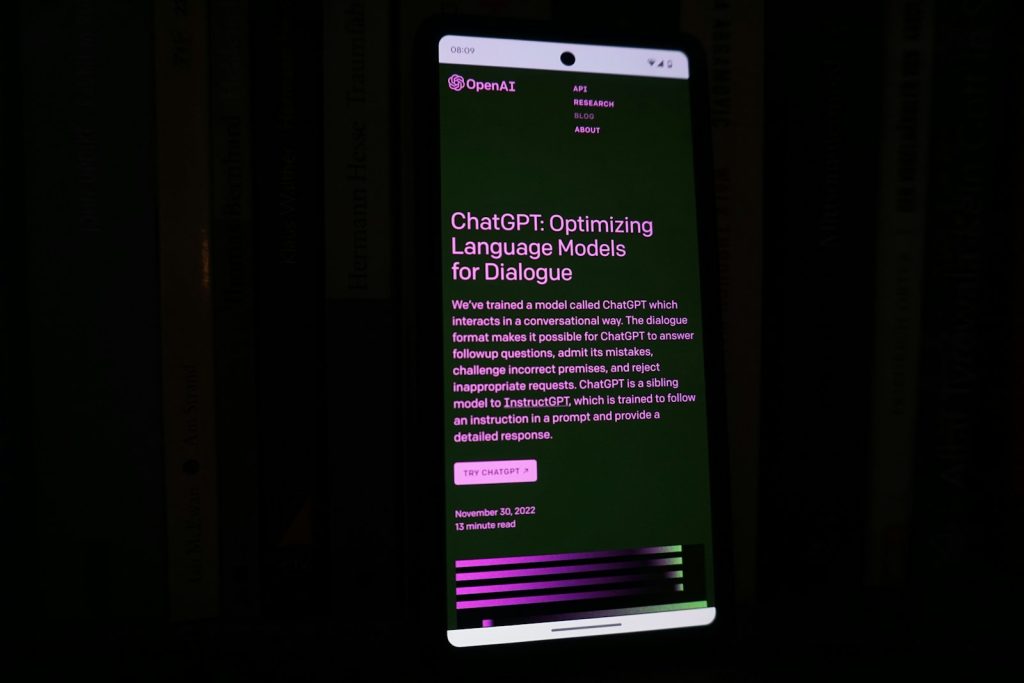
Cover photo: Rolf van Root / Unsplash