 DATING APP REVIEW
Grindr review 2026: still the biggest grid in gay life, now with a privacy reckoning
Grindr remains the default for gay, bi, trans and queer men looking nearby, and it is betting heavily on AI. Its privacy history, including a £26m UK settlement, is part of the picture.
Our score
Best for Gay, bi, trans and queer men meeting nearby, fast
- Store rating
- 4.1 (Google Play UK, 19 Oct 2026)
- Free version
- Yes, with ads
- Paid from
- £9.99 (XTRA, UK App Store; duration not stated)
- Platforms
- iOS, Android, web (subscribers)
- Owner
- Grindr Inc. (NYSE: GRND)
- Verification
- Mandatory age assurance in the UK, Australia and Brazil; no ID badge
- Paid tiers
- XTRA, Unlimited; Edge (AI premium tier) being introduced
- Users
- About 15 million monthly active users (company figure)
Pros
- Huge, location-led user base: about 15 million monthly active users
- Free tier is fully usable for chat and photo sharing
- Strong discretion tools: hide distance, discreet icon, PIN lock, Profile Hide
- Expiring photos and screenshot blocking on sensitive content
Cons
- Heavy ads on the free tier
- Data-protection record: upheld Norwegian fine and a £26m UK settlement over pre-2020 practices
- App Store privacy labels list extensive tracking
- Users regularly complain about bots, spam and unexplained bans
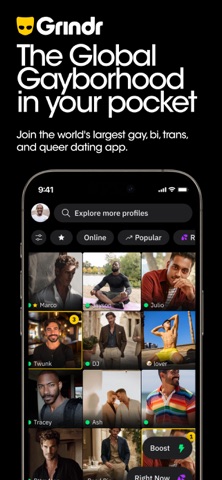
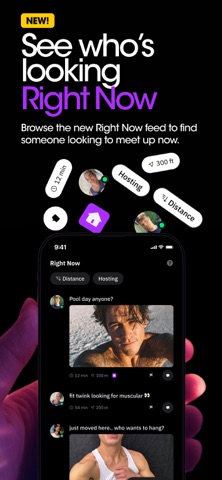
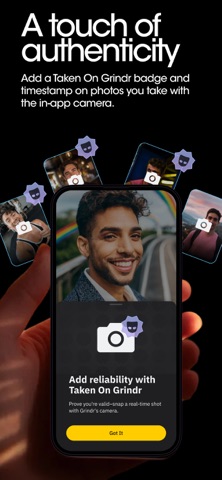
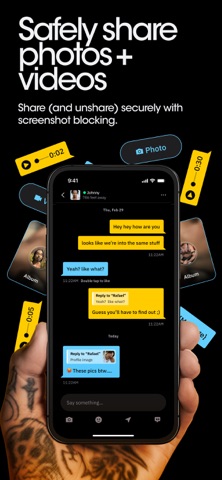
Inside the Grindr app: screens from the App Store
On 2 September 2026, Grindr agreed to pay £26 million to settle a High Court claim brought on behalf of about 12,000 UK users. The claim, reported by Infosecurity Magazine, alleged that between 2016 and 2020 the app shared sensitive data, in some cases including HIV status, with third parties without adequate consent. Grindr admitted no liability, disputes the allegations and points out that the period in question predates its change of ownership in 2020.
A month later the app was still sitting high in the charts, with about 15 million monthly active users according to the company. That contradiction is Grindr in a nutshell. For gay, bi, trans and queer men who want to see who is nearby, nothing else comes close for sheer numbers, and it carries a history that anyone handing it intimate information should understand.
Our Grindr verdict
Grindr scores 8.2 on reach and immediacy. Open it in almost any city and the grid fills with people within walking distance. The free tier is genuinely usable, the privacy controls available today are thoughtful, and the company’s current safety guidance is frank about real risks, from sextortion to travel in countries that criminalise LGBTQ+ life.
The deductions are for advertising that saturates the free version, store reviews full of complaints about bots and spam, and a data-protection record that includes a fine upheld by a Norwegian appeal court in October 2025 and the UK settlement above. Grindr says it has overhauled its privacy programme since 2020. In our assessment, it is the right tool for many men, used with care and with settings tightened.
How Grindr works: the grid
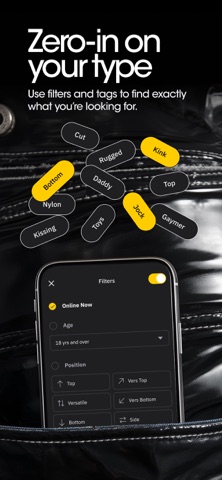
Grindr’s model has barely changed in spirit since its early days. You open the app and see a grid of profiles, ordered by distance. Tap one to view photos, a short bio and tags; tap again to chat. The UK App Store listing lists the free toolkit: chat, private photo sharing, private albums, interest tags, search filters, favourites, blocking and reporting.
There is no matching step and no need for mutual likes before a conversation. That directness is the appeal. It is also why the experience depends heavily on your own settings and judgement.
Grindr describes itself on its homepage as “the world’s largest social networking app for gay, bi, trans, and queer people”. Its Q2 2026 shareholder letter, filed with the US Securities and Exchange Commission, cites 15 million average monthly active users and 1.4 million average paying users, up 16 per cent year on year.
Right Now and the AI push
Right Now is Grindr’s real-time feature for people who want to meet promptly. The UK App Store listing shows a Right Now purchase at £1.99, and the Q2 letter says the feature has been broadened to integrate more naturally into the core app.
The bigger story is AI. Grindr’s 2026 product roadmap, published in March, positions it as an “AI-native” platform. Its gAI system is being extended into smarter matching, upgraded search and a “Smart Inbox” that prioritises conversations likely to go somewhere. The roadmap also promised discreet posting for Right Now, map-based discovery of nearby bars, clubs and gyms, and a Health Center launching first in the US. Rollout dates were not given, so expect features to arrive unevenly by market.
Profiles and discovery on Grindr
Profiles are light by design: photos, a display name, a short “about me”, and optional fields. Grindr’s privacy features page stresses that every profile field is optional. You decide how much to reveal, and you can leave your face off the main photo if discretion matters.
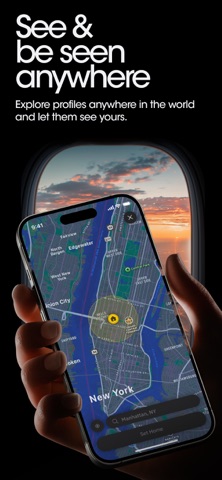
Discovery runs through the distance-sorted grid, the Explore tab for browsing other locations, and a “For You” recommendations feed. You can hide yourself from Explore searches and from For You if you prefer to be found only by people genuinely nearby. Tags help people signal interests, and filters narrow the grid by age and other criteria, with the more detailed filters reserved for subscribers.
Grindr pricing: XTRA versus Unlimited
Grindr has two main subscriptions, and a third arriving.
XTRA removes third-party ads, shows up to 600 profiles at once and adds filters for people online now, profiles with photos, position and relationship status, according to the App Store description.
Unlimited includes everything in XTRA, plus unlimited profiles, full access to the Viewed Me list, incognito browsing and the ability to unsend messages and photos.
On the UK App Store, checked on 19 October 2026, XTRA appeared at £9.99, £10.99, £14.99 and £15.99, and Unlimited at £24.99 and £39.99, with additional one-month items at £8.49 and £21.99, a Boost at £11.99 and Right Now at £1.99. Apple does not label which price corresponds to which plan length, so use these as a range. The web version of Grindr is available only to XTRA and Unlimited subscribers, the homepage notes.
Edge, the new premium tier
Grindr’s next step is Edge, which its Q2 letter calls an “AI-native premium tier” and expects to be a primary driver of revenue growth in 2027 and beyond. Global Dating Insights reported in August 2026 that Edge can cost hundreds of dollars a month depending on location, and that chief executive George Arison has described a further, higher-priced “social club aimed at gay men” in development. We could not find a published UK price for Edge.
Is free Grindr good enough?
For most people, yes. You can see nearby profiles, chat, send photos and use the core safety tools without paying. The trade-off is advertising, a capped grid and limited filters. If ads drive you to distraction, XTRA is the sensible minimum; Unlimited is for heavy users who want incognito and the Viewed Me list.
Is Grindr safe? Age checks, privacy tools and travel
Mandatory age assurance
Since July 2025, every UK user has had to confirm they are 18 or over to use Grindr, as part of compliance with the Online Safety Act. Grindr’s UK age verification page says this is a one-time video selfie check, with a photo ID option if needed, handled with the provider FaceTec. Grindr says the data is encrypted, not shared with third parties and deleted once the process is complete. Users who do not complete it cannot access the app in the UK.
The wider age assurance policy adds that similar checks began in Australia in December 2025 and Brazil in March 2026, for residents and travellers alike. Grindr says the check estimates age and confirms liveness, but does not use facial recognition or identity matching, and that neither it nor FaceTec keeps the image. Note what this is not: an identity check. Grindr does not offer a “verified” badge confirming that a person matches their photos.
Discretion and privacy tools
Grindr’s current tools are good, and most cost nothing. Its privacy features page and safety tips describe:
- Show distance off, to hide your exact distance. Grindr warns that your position in the grid can still let someone estimate it.
- Discreet App Icon, to disguise the app on your home screen.
- PIN Lock, in case someone else picks up your phone.
- Expiring photos, viewable once or for ten seconds.
- Screenshot blocking on some content, including expiring photos and albums, which Grindr admits is not foolproof.
- In-app video chat, to check someone is who they say before meeting.
- Hide yourself from Explore and For You.
Profile Hide, introduced in March 2025, lets you make your profile and someone else’s mutually invisible before you have chatted, without notifying them. It is available to all users and is particularly useful for avoiding exes, colleagues or neighbours.
Advice for LGBTQ+ travellers
Grindr’s safety guidance is direct about a risk many apps skirt: some countries criminalise LGBTQ+ life, and authorities or criminals have used apps to identify people. It advises researching local laws before travelling, keeping conversations in the app because scammers try to move people elsewhere, being alert to sextortion, and treating requests for money, cryptocurrency or verification codes as red flags. Meeting advice is sensible and unpreachy: public venues, your own transport home, tell a friend.
Grindr’s data-protection record
This is the part Grindr would rather you skipped. Norway’s data protection authority fined Grindr NOK 65 million, about €6.5 million, in December 2021 for sharing data with advertising partners without valid consent between 2018 and 2020. The fine was upheld by the Privacy Appeals Board, the Oslo District Court and, on 21 October 2025, the Borgarting Court of Appeal, as reported by PPC Land. The court treated the simple fact of using Grindr as revealing information about sexual orientation, so special-category data under GDPR.
The UK settlement followed in September 2026. Irish Legal News reported that the £26 million will be paid in two £13 million instalments, by the end of 2026 and by the end of March 2027, and that “the settlement includes no findings or admission of liability”. Grindr attributes the practices to the period before 2020, when it was owned by Beijing Kunlun Tech, and says it “is and remains a safe space for users”.
Today’s App Store privacy labels, supplied by the developer, still list location, identifiers and usage data as data used to track you across other companies’ apps and websites, and a long list of data linked to you, including health and fitness, sensitive info and search history. Read those labels before you fill in optional health fields.
Who owns Grindr? Shareholders, growth and user ratings
Grindr Inc. is listed on the New York Stock Exchange as GRND. In October 2025 its two largest shareholders, Ray Zage and James Lu, who together own more than 60 per cent of the stock, proposed taking the company private at $18 a share. On 24 November 2025, Grindr announced that its special committee had ceased engagement with the proposal, citing continued uncertainty over financing. Commercially the business is growing: Q2 2026 revenue was $138 million, up 33 per cent.
Users are more divided. As of 19 October 2026, Grindr held 4.3 from about 56,000 ratings on the UK App Store and 4.1 from roughly 1.68 million reviews on Google Play in the UK, where it has passed 50 million downloads. Those are healthy averages, but the written reviews on the App Store return again and again to bots, spam, aggressive ads, paywalls and bans without explanation.
Who Grindr suits, and who should skip it
It suits gay, bi, trans and queer men who want to see who is nearby and talk immediately, whether for dates, friendship or something more casual. It suits travellers who want to find local community quickly, provided they take the travel advice seriously.
Skip it if you want a slower, relationship-led experience, where Hinge or OkCupid will serve you better. Skip it if ads and unsolicited messages wear you down and you will not pay to reduce them. And think hard about which optional fields you complete if privacy is critical to your safety.
Grindr alternatives
For a broader, compatibility-led approach with extensive identity options, see our OkCupid review. Queer people exploring non-monogamy or kink-adjacent dating should read our Feeld review. For a relationship-first mainstream app with strong LGBTQ+ use, our Hinge review explains its appeal. All ten apps are compared in our best dating apps ranking.
Frequently asked questions
Is Grindr free?
Yes. The free version includes the grid, chat, photo sharing, blocking and reporting, with ads. XTRA removes third-party ads and adds filters; Unlimited adds incognito, Viewed Me and unsending messages.
Does Grindr verify users?
In the UK, Australia and Brazil, Grindr requires a one-time age assurance check using a video selfie, handled with FaceTec. This confirms age, not identity, and there is no verified-profile badge.
Can people see my exact location on Grindr?
You can turn off Show distance, but Grindr warns that your position in the distance-ordered grid can still let others estimate how close you are. Hiding from Explore and For You adds further discretion.
What was the Grindr £26m settlement about?
In September 2026 Grindr agreed to pay £26 million to settle a UK claim alleging it shared sensitive data, including HIV status in some cases, with third parties before 2020. It admitted no liability and disputes the claims.
Who owns Grindr?
Grindr Inc., listed on the New York Stock Exchange as GRND. Its largest shareholders proposed a take-private deal in 2025, but the company’s special committee ended talks that November.