 DATING APP REVIEW
Bumble review 2026: the women-first app rewrites its own rulebook
Bumble has dropped the rule that defined it and is preparing to retire the swipe. The safety tools are excellent; the identity is under construction.
Our score
Best for Women who want control and strong safety tools
- Store rating
- 3.8 (Google Play UK, 19 Oct 2026)
- Free version
- Yes
- Paid from
- £2.49 (Bumble Boost item, UK App Store; duration not stated)
- Platforms
- iOS, Android
- Owner
- Bumble Inc.
- Verification
- Photo verification and ID verification
- Paid tiers
- Bumble Boost, Premium, Premium+
- App Store rating (UK)
- 4.2 from 268k ratings (19 Oct 2026)
Pros
- Some of the most complete safety tooling of any mainstream app
- Longer 72-hour reply window takes pressure off new matches
- Opening Moves and Notes give quieter ways to start a chat
- BFF mode for friendships sits within the same ecosystem
Cons
- Its founding women-first rule has gone, blurring what made it different
- A major swipe-free redesign is still to come, so the app may change again soon
- Paying users fell sharply in 2026, a sign of a shrinking paid community
- Prices are opaque: the help centre lists no figures
Inside the Bumble app: screens from the App Store
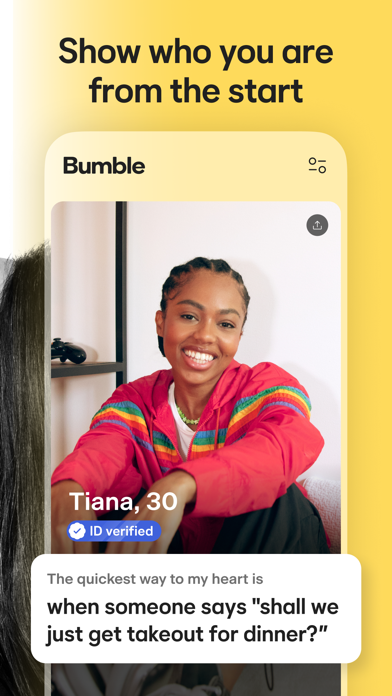
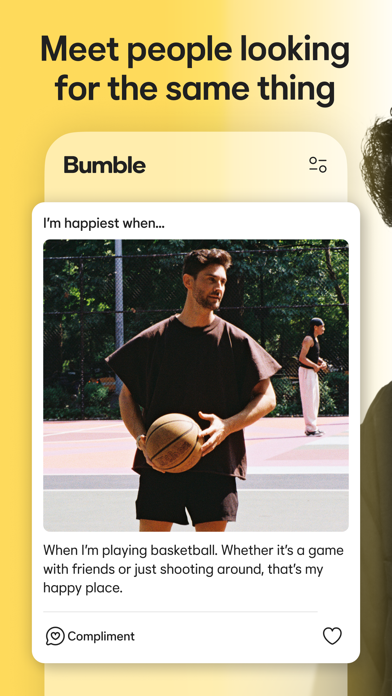
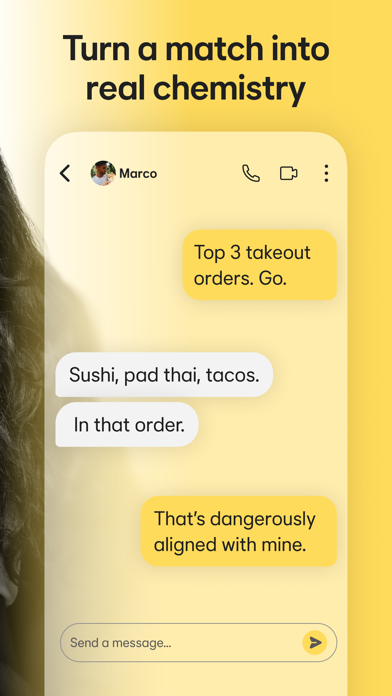
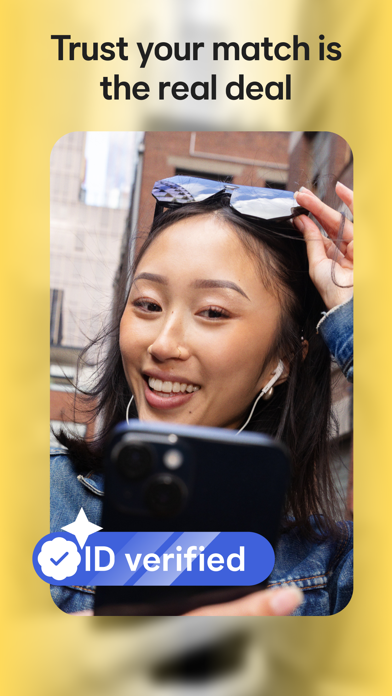
For more than a decade, Bumble’s identity fitted in a single sentence: in a match between a man and a woman, she sends the first message. On 11 August 2026 that sentence stopped being true. Bumble announced that either person can now open the conversation, a change it described as global, after a test in Canada over the summer, according to the company’s own press release.
It is not the only rule being rewritten. In May, chief executive and founder Whitney Wolfe Herd told Axios that Bumble would also drop swiping, with a replacement due in the fourth quarter of 2026 in select markets, as Engadget reported. Reviewing Bumble in October 2026, then, means reviewing an app halfway through reinventing itself.
Our verdict on Bumble
Bumble remains one of the best mainstream dating apps because its safety and respect-first design run deeper than any single messaging rule. Photo and ID verification, AI that blurs explicit images and filters scam accounts, in-app video calls, a weapons ban on profile photos: few rivals offer as complete a set. The new 72-hour reply window is also a quiet improvement on the old 24-hour scramble.
The trouble is distinctiveness. With women-first gone and a swipe-free redesign pending, Bumble now resembles its competitors more than it has ever done, and its paying audience has been shrinking. We hold our 9.0 score for now on the strength of its safety and moderation, but this is the review on our list most likely to change once the new Bumble arrives.
How Bumble works now: anyone can make the first move
You build a profile with photos, prompts and interests, then browse and swipe. When two people like each other, they match. Under the August 2026 rules, either person can send the first message; the chat opens once the other person replies, and each side gets one initial message until then, according to Bumble’s release. If you try to send something very short, such as a single word, the app nudges you to write something more thoughtful.
Matches now have 72 hours to respond, up from 24. Bumble says this came from member feedback and testing: in an August 2024 internal survey of 2,267 US women, 66% said they preferred men to send the first message. In the Canadian tests, more than half of surveyed members said the longer window improved their experience, and 92% of women said they still felt in control. The company also reported fewer expired chats and fewer unmatches during testing.
“Being women-first was never about prescribing just one way to connect,” Wolfe Herd said, as quoted by Fast Company. Not every user agreed; the same report noted some argued the change strips away what set Bumble apart.
Bee and the end of the swipe
The next phase is larger. In March 2026, Bumble said it was testing Bee, an AI dating assistant that interviews new users and recommends matches, and which the company envisions eventually suggesting dates and gathering feedback, according to Engadget. Wolfe Herd called the planned swipe replacement “revolutionary for the category”, without saying exactly what it is. Axios reported it would arrive in Q4 2026, initially only in select markets.
As of this review, Bumble has not published details of which markets will get the swipe-free version first. If you download Bumble today, you are using the familiar swipe-based app with the new messaging rules. Our guide to AI in dating tracks how features like Bee are spreading across the industry.
Bumble profiles and matching: prompts, Opening Moves and Notes
Bumble’s profiles are built from photos, interests and prompts, with optional Spotify linking, according to its Google Play listing. Two features give you softer ways to start a conversation. Opening Moves, introduced in 2024, lets you set questions on your profile for matches to answer, as TechCrunch recalls. Notes (formerly called Compliments) let you send a message before matching, based on something on the other person’s profile.
Snooze Mode lets you pause the app without deleting your profile, which is handy if you are seeing someone or simply need a break. And BFF, the friendship app formerly known as Bumble For Friends, was relaunched in the US in September 2025, according to Bumble Inc.’s Q2 2026 results. The company says it has not yet tried to make money from it.
Bumble pricing: Boost, Premium and Premium+ compared
Bumble is free to download, and you can match and message without paying. The paid structure, as set out in Bumble’s help centre, has three subscription levels.
Bumble Boost – Unlimited likes – 5 SuperSwipes and 1 Spotlight a week – Extend matches by an extra 72 hours – Rematch with expired connections – Unlimited Backtrack (undo a left swipe)
Bumble Premium (everything in Boost, plus) – See who has already liked you – Advanced filters – Incognito Mode, showing your profile only to people you choose – Travel Mode to change your location
Bumble Premium+ (everything in Premium, plus) – Photo insights showing which pictures people like most – Fast-tracked likes and priority placement in feeds – 2 Notes, 10 SuperSwipes and 2 Spotlights a week
You can also buy SuperSwipes, Spotlights and Notes individually.
Bumble’s help centre explains that prices depend on tier, plan length and pack size, and that longer plans and bigger packs are generally better value; it doesn’t publish figures and doesn’t accept promo codes. On the UK App Store on 19 October 2026, Bumble Boost items ranged from £2.49 to £10.99, Bumble Premium items from £13.99 to £16.99, and seven-day Premium items were listed at £9.99 and £21.99. The listing doesn’t map each price to a plan length, and Premium+ wasn’t itemised, so check the Pay plan tab in the app for your exact options.
Is Bumble Premium worth paying for?
If you are getting plenty of likes, Premium’s “see who liked you” queue saves a great deal of swiping, and Incognito Mode has genuine privacy value. Boost is the cheaper option if your main frustration is matches expiring. Premium+ sells visibility and photo analytics; useful for some, but hard to justify unless you are already a heavy user. One further consideration: with a significant redesign due, a long, discounted plan locks you into an app that may look very different within months.
Is Bumble safe? Verification, AI moderation and privacy
Safety is where Bumble most clearly earns its score. Its safety features page lists:
- Photo Verification, confirming a match is who they claim to be
- ID verification, an extra layer of trust that checks your identity
- Private Detector, which automatically blurs potentially explicit images so you can choose whether to view them
- Deception Detector, an AI tool that flags and blocks scam, spam and fake profiles, backed by human moderators
- In-app video and voice calls, so you don’t need to share a phone number until you are ready
- A ban on weapons in profile photos and zero tolerance for hate speech, sexual harassment and fetishisation
- Block, report and unmatch tools, and 24/7 monitoring by a global moderation team
Bumble says that in testing, Deception Detector automatically blocked 95% of the accounts identified as spam or scams. The same page cites Bumble research in which 46% of women said their top online dating concern was not knowing whether a match was who they claimed to be. These are company figures rather than independent audits, but the tools themselves are concrete and visible.
For context on the risks these features address, see our romance scam statistics.
The business picture: why Bumble is changing
Bumble’s reinvention follows a difficult stretch. In the second quarter of 2026, total revenue fell 15.2% to $210.5 million, and the Bumble app’s average paying users dropped to 2.08 million from 2.50 million a year earlier, according to the company’s SEC filing. Average revenue per paying Bumble user, by contrast, edged up to $27.55. Bumble also discontinued its Fruitz and Official apps as part of a restructuring.
Wolfe Herd said in the results that “there is more happening at Bumble today than at any point in years”, describing a reimagined app designed to help members meet in person sooner. For users, a shrinking paid base doesn’t necessarily mean a shrinking dating pool, since most people use the free version, but it explains the urgency of the overhaul.
Who Bumble suits (and who should skip it)
Bumble suits anyone who places safety and moderation high on their list, and women in particular who want visible, well-developed tools against explicit images and scam accounts. The longer reply window will suit people who don’t live on their phones. If you want both dating and new friendships, BFF makes it a broader social app than most rivals.
Skip it, or wait, if the women-first rule was the reason you chose Bumble; that version of the app no longer exists. If you dislike disruption, the planned swipe-free redesign may be a reason to hold off on a long subscription.
On 19 October 2026, Bumble held 4.2 out of 5 from 268,000 ratings on the UK App Store, and 3.8 from about 1.58 million reviews on Google Play in the UK, where it has more than 100 million downloads.
Bumble alternatives to consider
- Hinge: our top-rated app, prompt-led and relationship-focused. Read our Hinge review.
- Tinder: the largest pool, with new AI matching and in-person Events. See our Tinder review.
- Match: older, search-led and more traditional. Our Match review explains the tiers.
- eharmony: questionnaire-driven matching for long-term intent. See our eharmony review.
The full ranking is in our guide to the best dating apps.
Frequently asked questions
Do women still have to message first on Bumble?
No. Since 11 August 2026, either person in a match can send the first message. The recipient has 72 hours to reply, and the chat fully opens once they do.
Is Bumble getting rid of swiping?
Bumble has said it will replace swiping, with the new experience expected in the fourth quarter of 2026 in select markets. It has also been testing Bee, an AI assistant that interviews users and recommends matches.
What is the difference between Bumble Premium and Premium+?
Premium shows who has liked you and adds advanced filters, Incognito Mode and Travel Mode. Premium+ adds photo insights, priority placement, fast-tracked likes and more weekly Notes, SuperSwipes and Spotlights.
Does Bumble verify users?
Bumble offers photo verification and ID verification, and uses an AI tool called Deception Detector, alongside human moderators, to catch fake and scam accounts.
Who owns Bumble?
Bumble is owned by Bumble Inc., which also owns Badoo and the BFF friendship app.