“I posed as a woman on a dating app”: two years with a con artist from Tinder, and dating in Tashkent
Dimitry Perepelin has been dating online for almost twenty years. In Tashkent he spent two years with a woman he met on Tinder, and more than 40,000 on her. Later he set up a female profile to see men through her eyes. A guest column on trust, money and checking who you are talking to.

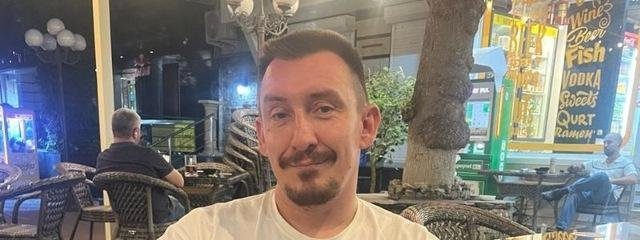
Dimitry Perepelin has been dating online for almost twenty years. He started on Rambler, an early Russian web portal with its own dating service, long before apps existed. In 2022 he moved from the Moscow region to Tashkent, the capital of Uzbekistan, met a woman on Tinder, spent two years with her and, by his own count, more than 40,000$ on her. Later he set up a female profile on a dating app to see men through a woman’s eyes. In this guest column he tells a dating scam story from the inside: how it starts with small requests, why he never once insisted on a video call, and why he is now building an app with identity checks.
My name is Dimitry Perepelin. I grew up in Novocheboksarsk, a small city on the Volga, lived in Podolsk near Moscow for years, and since autumn 2022 I have lived in Tashkent. In two decades of online dating I think I have seen it all: funny first dates, a friendship that grew out of a chat, and a story that changed how I look at every profile.
Where it started: online dating in 2006
It was around 2006, before my first wedding. My email was on Rambler, and Rambler had a dating section. There I started chatting with a woman from Nizhny Novgorod. We got on well, something about her stayed with me, and I travelled roughly 400 kilometres to meet her.
She came to our date by the city’s Kremlin with a friend. Half an hour later, a man joined them. I worked out later that she simply needed someone to talk to, like a stranger on a train you can tell anything because you will never see them again. We met once more the next day, wandered around in the freezing cold and said goodbye.
There was another story too. I arranged to meet a woman from Cheboksary outside a cinema. I arrived, and she was about a head taller than me. Somehow height had never come up in our messages, and we both burst out laughing. For years afterwards she was saved in my phone as “Lena Rambler”: we stayed friends, called each other and met up, even after I got married.
“Sometimes a person just needs a stranger on a train: someone to tell everything to and never see again.”
— Dimitry Perepelin
Dating in Tashkent: Tinder and the first “could you lend me”
On 1 October 2022 I moved to Tashkent. I rented a three-bedroom flat, hoping my family would join me. On 27 December I matched with a woman on Tinder. I will call her M.; her real name does not matter here.
It began with a coincidence: she had lived in Podolsk for a few years, just like me. That brought us closer straight away. The very next day she wrote that she was broke and asked for 100,000 Uzbek som, less than ten dollars, “for a kebab”. I thought nothing of it at the time.
We moved to Telegram. In more than two weeks there was not a single video call and only one phone call. Now I understand that she reads men extremely well: what hurts, where they are weak, what they will respond to.
“Not one video call in two weeks, and I was already on my way to a date.”
— Dimitry Perepelin
Minus 23 and the date that never happened
We agreed to meet on 16 January 2023 outside a metro station, by a KFC. That week Tashkent was hit by freak frosts of down to minus 23°C, which almost never happens there. I waited half an hour, then travelled towards her and waited outside again. My signal dropped. I was frozen, angry and sure I was being played, so I blocked her and went home. That evening I went to see Avatar: The Way of Water and fell asleep in my seat.
She messaged me on Tinder, hurt, and wished me luck. My conscience got to me. I unblocked her, and the next day I went to her, to a friend’s flat on the edge of the city, with a bag of food: she had asked me not to come empty-handed.
We had barely sat down in the kitchen when the power went out: the grid could not cope with the cold. She asked to come to mine, where I had hot water and electricity. That night I came down with a fever. Early in the morning she took cash from me to go to a 24-hour pharmacy, and vanished. Her phone was off. Later it turned out she had gone to her mother’s in another city.
Two years, a divorce and a “sister”: a dating scam from the inside
This is not easy to write, but it is part of the story: I was still married at the time. Then the requests started. No money, everything was bad. I helped where I could, and she held on to that.
We were together for almost two years, until November 2024. Her condition was that I divorce, and I did. We got married. I rented a separate flat for her mother and her sister and helped move a whole lorry-load of their things. Money went on rent, on medical treatment that was never confirmed and, once, on a blood transfusion for a cat that was supposedly dying.
We did not see each other often, and there was no one I could check her stories with: she quickly cut off any contact with her family. It was my ex-wife who later spotted what I had missed. The “sister”, she said, was in fact M.’s daughter.
I saw in 2024 alone in Tashkent; she turned up on 2 January as if nothing had happened. And when I came back after the divorce and we rented a flat together, she changed her mind the day before moving in and stayed with her mother.
How much did I spend in total? More than 40,000. And not in som.
“I thought I was building a relationship. In fact I was paying for the stage set.”
— Dimitry Perepelin
This is the author’s personal account and view. Names and details that could identify other people have been changed or left out.
The experiment: I posed as a woman on a dating app
Last year I wanted to see dating from the other side. I set up a female profile on Mamba, a Russian-language dating app that is popular across Central Asia: age 40, Tashkent. The photos were not mine. I admit it was a bad idea, and I would not advise anyone to repeat it.
The profile collected hundreds of likes almost the moment it went live, and more than a thousand within a few days. There were so many messages that I never read half of them: around 15 different men wrote every day. My own male profile, by comparison, got a handful.
What surprised me most was something else. Most of the men who wrote, aged from 27 to 50, were perfectly normal and polite. No rudeness at all. But the moment “she” mentioned feeling ill or craving something sweet, someone offered to send money and asked for a card number. Men were ready to spend money on a person they had never seen. There were blunt offers of money for a night, and a couple looking for a third person who proposed a “paid meeting”. I politely said no to everyone and took no money from anyone.
One divorced man from Moscow, about my age, said he would fly over, and he actually did, as a surprise. I decided not to hide and met him myself, in a bar, with other people around. There was a second’s pause and his face changed, but he kept his composure. We stayed in touch afterwards, and I told him the one thing that matters: never travel to meet someone without checking who you are talking to. Ask for a video call. Mamba has one built in, but hardly anyone uses it.
“I looked at men through a woman’s eyes and learned how not to behave.”
— Dimitry Perepelin
Editor’s note: pretending to be someone else and using other people’s photos breaks the rules of every dating service and, in some cases, the law. This is known as catfishing. We publish this episode as part of the author’s personal experience, not as an example to follow. For the warning signs, see our romance scam statistics; for meeting safely, our first date safety guide.
Dating apps without identity checks
The apps people use most in Tashkent, which in my experience means Mamba and Tinder, have no mandatory ID check. You can call yourself anything and use any photos: I saw that for myself. To me, that is the core problem with all of these services.
I also have a feeling I cannot prove: the algorithms seem to track when and how long you spend in the app, and some profiles look empty, with no real person behind them. That is an easy way to keep interest up and nudge people into paying.
That is why the dating app I am now building for Tashkent makes verification mandatory for men and women alike: through a government digital ID with biometrics and a short video lasting a few seconds. Verified users get access to extra features. Trust in a service like that is on a different level.
“You can call yourself anything and use any photos. I tested it myself.”
— Dimitry Perepelin
My rules for avoiding a dating scam
- Never send money to someone you have not met, whoever they are and whatever the reason.
- Video call before you meet. If they keep finding reasons to avoid it, that is your answer.
- Watch what they do, not what they say. Lateness, disappearing acts and “can you lend me until tomorrow” tell you more than any chat.
- Check what can be checked: name, city, mutual friends and the story you are being told.
P.S. As far as I can see, M. is still meeting people on dating apps. That is why I decided to tell this story.
Read next: A Russian “German” on dating in Germany: 900 matches, and still no one to love
This column reflects the author’s personal experience and opinions, not those of the editorial team. It has been edited for clarity.
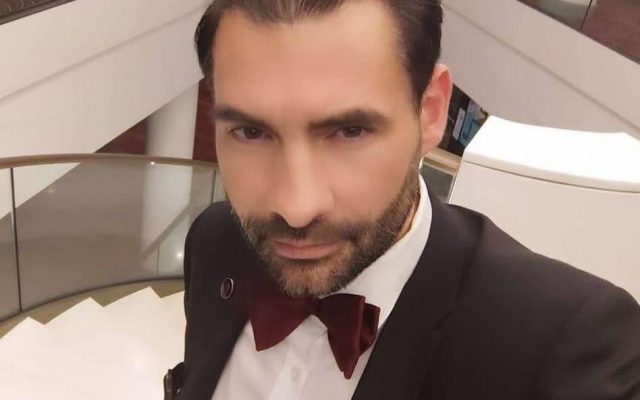
Cover photo: Dimitry Perepelin’s personal archive